Interior walls
Bedrooms, bathrooms and offices where you want privacy between rooms without the cost of closed cell.
Light density 0.5 lb foam
Super Sprayers installs open cell spray foam where it genuinely fits, and we are upfront that in Ontario that is a narrower list of places than you'll read about on American websites. Since 2018 our certified crews have completed more than 800 insulation jobs around Guelph, and most of them use closed cell foam. Open cell still has a real job to do, especially inside the house and anywhere sound control matters more than squeezing out the highest R-value.
Open cell foam is soft, light and flexible. It expands to roughly 100 times its liquid volume and fills an entire stud cavity, wrapping around wires, pipes and odd framing without leaving gaps. It costs less per inch than closed cell and absorbs airborne sound well, which makes it a good choice between rooms and between floors.
The trade-off is moisture. Open cell lets water vapour pass through, so in our cold climate it always needs a separate vapour barrier on the warm side, and it has no place below grade or in farm buildings. This page explains where we use it, where we won't, what it costs compared with closed cell and how to decide whether it belongs in your project at all.
Open cell foam weighs about 0.5 lb per cubic foot and its cells are left open, so the foam is filled with air rather than a trapped gas. That gives roughly R-3.5 to R-3.8 per inch, a little better than a fiberglass batt. The material is covered by the CAN/ULC-S712 standard for light density foam.
Because it expands so much, one pass fills a 2x6 cavity completely. Any excess is trimmed flush with the studs before drywall.
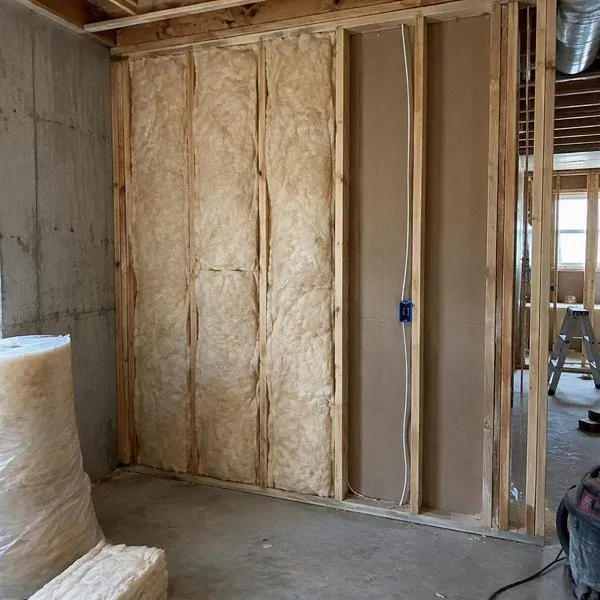
Bedrooms, bathrooms and offices where you want privacy between rooms without the cost of closed cell.
Softens footstep and voice noise between levels, especially paired with a resilient ceiling.
2x6 and deeper exterior walls or attic slopes in dry, heated spaces, with a proper vapour barrier added.
Saying no is part of doing this properly. We steer clients away from open cell in these places.
Open cell foam is vapour permeable, so warm indoor moisture can move through it and condense on the cold sheathing behind. The Ontario Building Code requires a vapour barrier on the warm side of insulation in heated buildings, and open cell does not meet that on its own. We install sealed polyethylene or a vapour retarder paint system as the assembly requires.
That extra layer is part of the price comparison, and it is one reason closed cell sometimes costs less overall than it first appears.
The soft, open structure of the foam absorbs airborne sound such as voices and television. It also seals the small gaps around outlets and pipes where sound leaks between rooms. For real soundproofing, foam works best as one part of an assembly that adds mass and decouples the drywall.
Our soundproofing page explains how the pieces fit together.
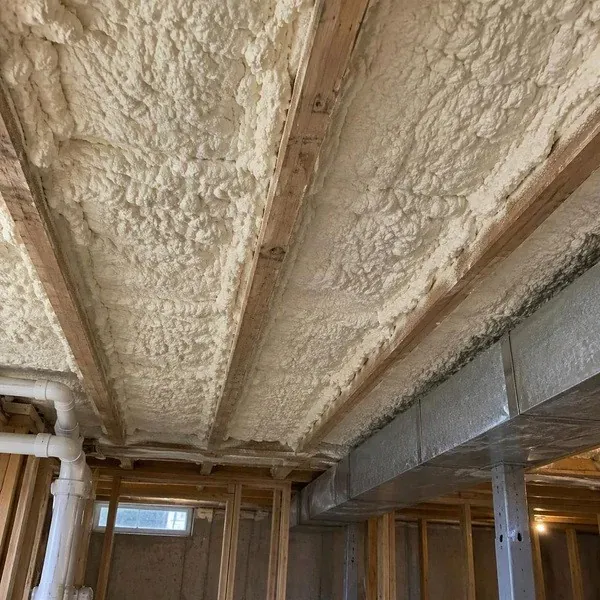
Open cell typically runs about $0.50 to $0.80 per board foot installed in 2026. It is cheaper per inch, but it fills the whole cavity, so a 2x6 wall takes about 5.5 board feet per square foot. Add the vapour barrier and compare the finished assembly, not the foam alone.
Per inch, yes, by a wide margin. Per finished wall, the gap narrows once you fill the full cavity and add a vapour barrier.
Yes. It is vapour permeable, so heated buildings need a separate vapour barrier on the warm side.
We don't recommend it. Basement walls need foam that controls vapour and tolerates moisture, which is what closed cell does.
Free estimate
Not sure which foam fits? Describe the space and we'll tell you honestly which one we'd use and why.