Quonsets, steel shops and pre-engineered buildings
Metal Building Insulation for Quonsets and Steel Shops Near Guelph
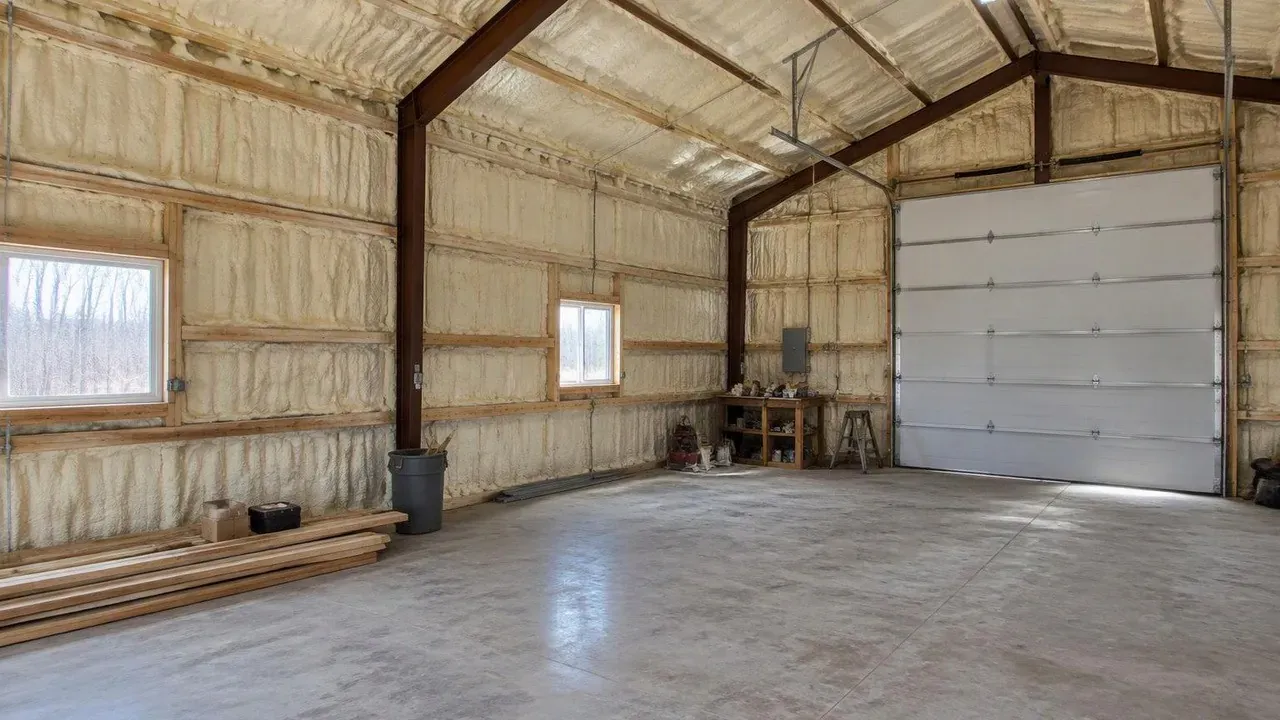
Super Sprayers sprays closed cell foam inside quonset huts, steel workshops and pre-engineered metal buildings across Guelph, Wellington County and Waterloo Region. Since 2018 we have finished more than 800 insulation jobs, and steel buildings are some of the most satisfying, because the change from a dripping shell to a dry, quiet shop happens in a single day. Our installers are CUFCA certified, WSIB covered and trained to the CAN/ULC-S705 installation standard, which governs how every pass of foam is mixed, sprayed and checked.
A metal building is not a wood-framed house, and that changes the whole insulation plan. Quonsets have no framing at all, and pre-engineered buildings have widely spaced girts and purlins with the cladding screwed straight to them. There is nowhere to hang a batt properly, and every panel lap, ridge cap and screw hole leaks air into the building.
Spray foam goes directly onto the steel, seals the seams and adds R-value without building any framing. It also stiffens the panels and dampens the drumming of rain and hail on a steel roof, which anyone who has worked in an uninsulated quonset will appreciate. This page explains why steel sweats, how we prepare it, how thick the foam needs to be for the way you use the building and when a fire-rated coating has to go over it.
- In business since 2018
- 800+ jobs completed
- WSIB covered, licensed and insured
- 2-year labour warranty
- 5-star Google rating
Why Steel Buildings Sweat
Steel conducts heat very quickly, so the inside face of a panel is almost as cold as the outside air. When warm air from a heater, a running engine or a humid summer night touches that steel, the water vapour condenses. In winter it freezes as frost and then rains down when the sun comes out.
That water rusts tools and fasteners, grows mould on stored goods and drips on anything parked underneath. Closed cell foam puts a warm surface between the air and the steel, which ends the cycle.
Insulating Quonset Huts
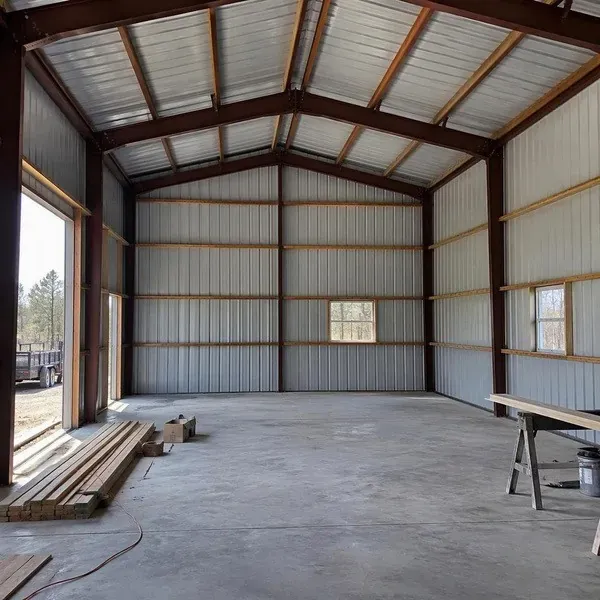
A quonset is one continuous arch of corrugated steel with no studs or rafters. Closed cell foam is sprayed straight onto the corrugations, filling the valleys and building up an even layer over the ribs. On an arch, the wall and roof are the same surface, so the whole building gets one seamless coat.
End walls are usually framed and get the same foam. We seal the joint where the arch meets the end wall, since that joint is where most quonsets leak air.
Pre-Engineered Buildings and Steel Shops
Pre-engineered buildings often come with a thin, faced fiberglass blanket pinched between the purlins and the roof panels. After a few years it sags, tears and holds moisture. We either remove it or spray over the facing where it is still tight and dry.
Where girts and purlins are exposed, we spray around them to limit thermal bridging through the steel. If you plan to line the walls with steel liner panels or plywood later, we leave the foam at a depth that suits your finish.
Preparing Steel Before Spraying
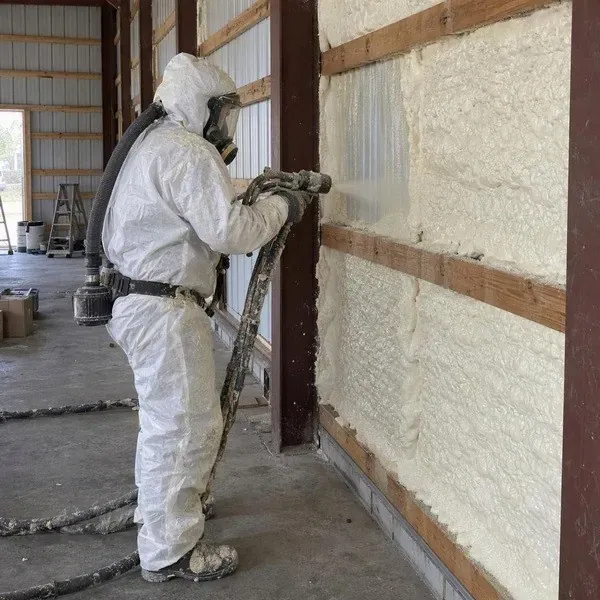
Foam only performs if it bonds. These are the prep steps that decide whether it will.
- 1
Clean the panels
Oil, dust, bird droppings and mill residue stop foam sticking. We blow down or wash panels as needed.
- 2
Check steel temperature
In cold weather the steel can be below the foam's minimum substrate temperature. We check it and heat the building if needed.
- 3
Prime where required
Some foam manufacturers call for a primer on certain coated or galvanized steel. We follow their instructions.
- 4
Mask and protect
Doors, windows, equipment and floors get covered before the first pass.
Thickness, R-Value and Fire Protection
Closed cell foam delivers roughly R-6 per inch. These thicknesses cover most metal buildings we see.
| Thickness | Approximate R-value | Suits |
|---|---|---|
| 1 in | About R-6 | Condensation control on cold storage |
| 2 in | About R-12 | Occasionally heated shops |
| 3 in | About R-18 | Heated workshops and garages |
| 4 in or more | About R-24 and up | Fully heated work and living space |
Shops with welding, grinding or heaters need a thermal barrier or fire-rated coating over the foam. We apply that too, as explained on our fireproofing and thermal barriers page.
Metal Building Questions
Can spray foam go directly on steel?
Yes. Closed cell foam bonds well to clean, dry steel at the right temperature, and some coated panels need a primer first.
How thick should foam be in a quonset?
About 1 inch stops condensation, and 2 to 3 inches suits a heated shop. We size it to how warm you plan to keep the building.
Does my shop need a fire coating over the foam?
If the foam is exposed in a space with people, heaters or hot work, the building code expects a thermal barrier or approved coating. Unheated storage may have different requirements, so we check with you before quoting.
Related Services and Resources
- Agricultural Spray Foam Pole barns and livestock barns that stop dripping.
- Garage Insulation Heated workshops and warmer rooms over the garage.
- Fireproofing and Thermal Barriers Code-compliant coatings over exposed foam and steel.
- Closed Cell Spray Foam The highest R-value per inch, with vapour control built in.
- Shipping Container Insulation Container homes, offices and storage without the sweat.
- Spray Foam Cost Guide 2026 prices per square foot, board foot and project.
Free estimate
Get a Metal Building Quote
Send the building dimensions, a couple of photos inside and how you plan to use it. We'll recommend a thickness and give you a written price.
- Call or text226-780-8752
- Emailinfo@supersprayers.ca
- Mon to Sat: 7:00am to 9:00pmSun: 9:00am to 6:00pm