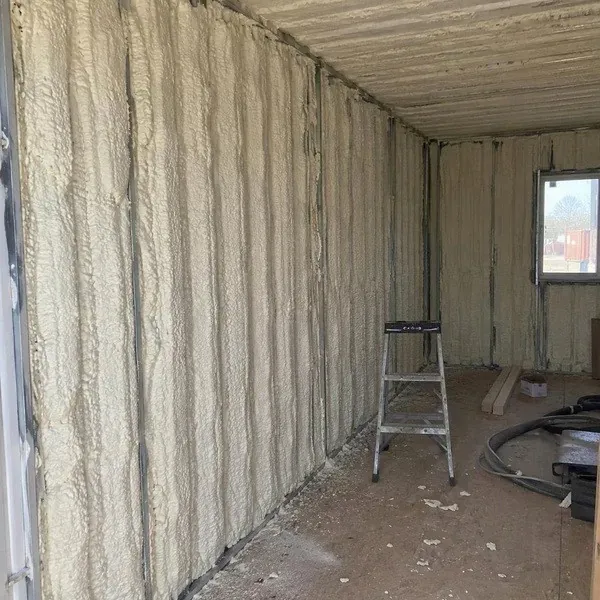
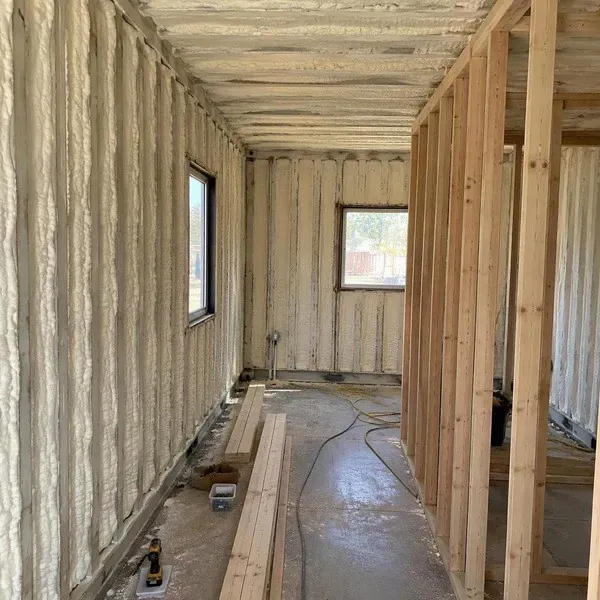
Inside, sprayed on the steel
The most common approach. You lose a few inches of interior width, but the corrugated exterior stays intact and weatherproof, with no cladding needed.
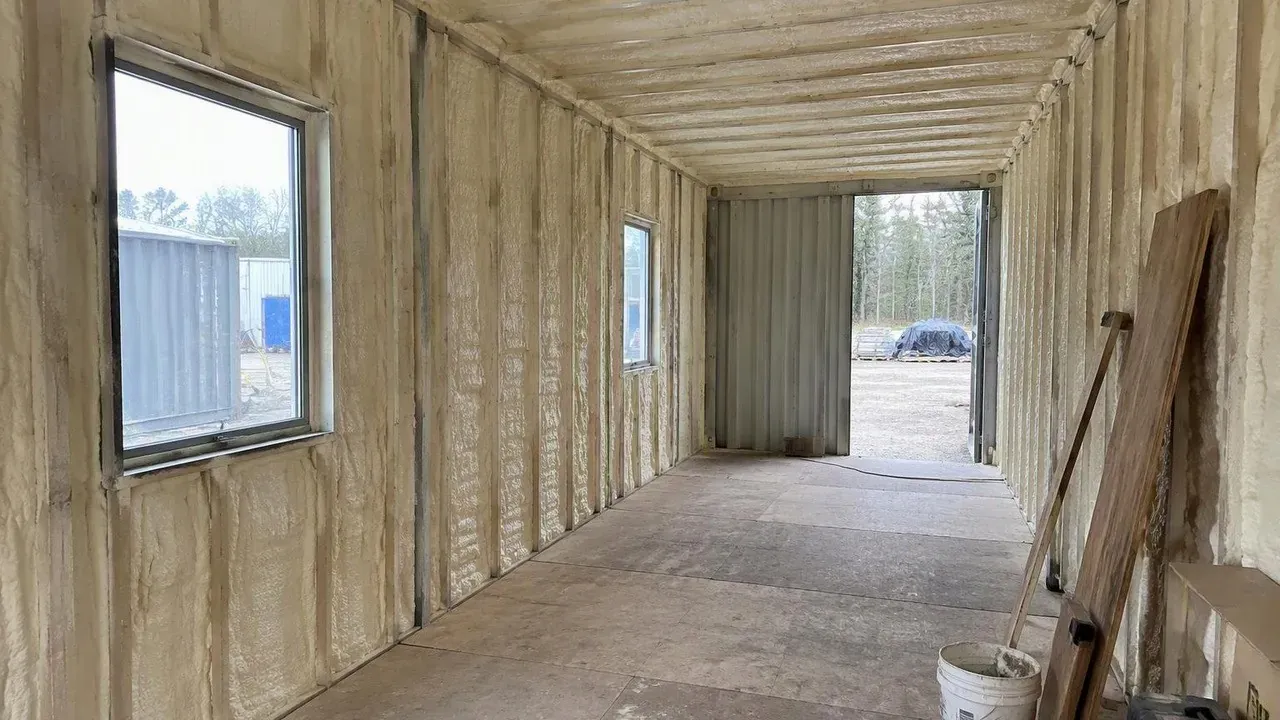
Homes, offices, workshops and storage
Super Sprayers insulates shipping container conversions across Guelph, Wellington County and Waterloo Region, from backyard offices and farm storage units to full container homes. Since 2018 our certified crews have completed more than 800 spray foam jobs, and container conversions are some of the most distinctive projects we take on. A container is a steel box engineered to be stacked on a ship and survive salt spray, not a building designed for people to live and work inside.
That steel shell conducts heat almost instantly. On a cold night the walls drop to the outside temperature, and any moisture from breathing, cooking or a propane heater condenses on them and runs down to the floor. Left alone, that water rusts the box from the inside out, stains the plywood floor and soaks anything stored in it, from tools and paperwork to furniture.
Closed cell spray foam bonds directly to the corrugated steel, seals the doors and seams and keeps the interior surface warm, all while using as little floor space as possible. Our installers are CUFCA certified, WSIB covered and follow the CAN/ULC-S705 installation standard, and we can spray a container on your property or at your fabricator's yard before it is delivered to site.
Steel has almost no insulating value, so the inside face of a container wall sits at nearly outdoor temperature. Warm indoor air holds moisture, and when it touches that cold steel the moisture condenses. In winter it turns to frost on the ceiling and then drips when the sun hits the roof.
Batts and board can't stop it, because air still reaches the steel behind them. Foam applied directly to the steel is the only reliable fix.
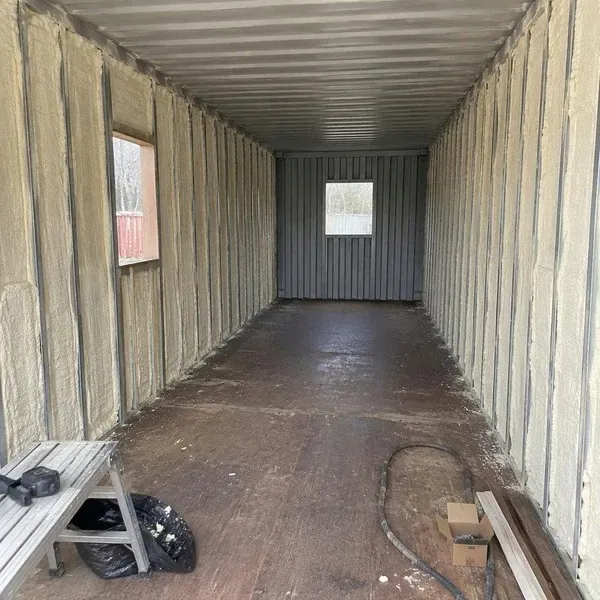
Containers come with history. These are the prep points we check before spraying.
The most common approach. You lose a few inches of interior width, but the corrugated exterior stays intact and weatherproof, with no cladding needed.
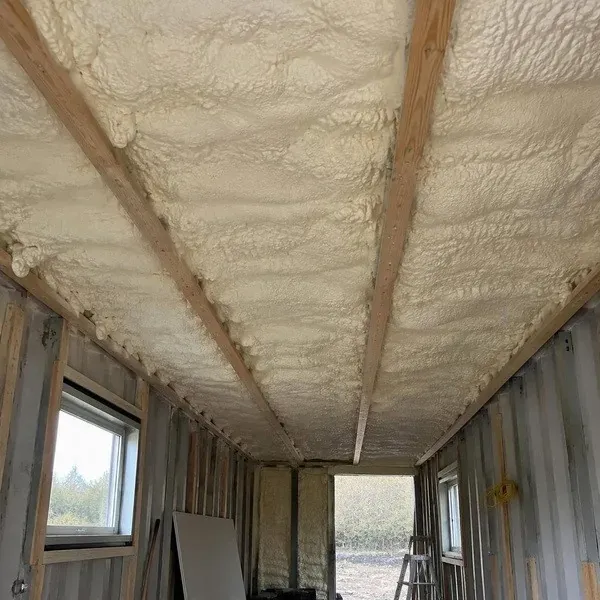
Keeps every inch of interior space and hides the steel, but the foam then needs cladding or a protective coating over it. It suits architect-designed homes with a finished exterior.
How you use the container decides the foam thickness.
| Use | Typical closed cell thickness | Goal |
|---|---|---|
| Dry storage | 1 in | Stop condensation and rust |
| Workshop or site office | 2 in | Condensation control and heat retention |
| Year-round office | 2 to 3 in | Comfortable all winter |
| Container home | 3 in or more | Meets energy targets with the rest of the design |
Occupied containers need a thermal barrier over the foam, usually drywall or plywood fastened to furring or framing. Wiring runs in the framing space in front of the foam. We leave the foam at a depth that suits your framing plan.
Any container used as a home or occupied workspace is a building, and it needs a building permit from your municipality before you start. We can supply foam documentation for the permit file.
About 1 inch for storage, 2 inches for a heated office or shop, and 3 inches or more for a home. We match it to how you'll use and heat the space.
Yes, as long as the rig can park within hose reach. We can also spray at your fabricator's yard before delivery.
Yes. A container used as a dwelling is regulated like any other building, so check with your local building department before you begin.
Free estimate
Tell us the container size, 20 ft or 40 ft, how you'll use it and where it's located.