Airborne noise
Voices, music and television travel through the air and set walls vibrating. Cavity absorption, sealed gaps and added mass all reduce it, and foam handles the first two well.
Honest advice on noise
Super Sprayers installs thermal acoustical spray foam and spray-applied acoustic insulation in homes, rental properties, offices and commercial spaces across Guelph, Waterloo and Kitchener. Since 2018 our certified crews have completed more than 800 insulation jobs, and a growing share of calls start with noise rather than cold. Landlords near the universities, parents working from home and anyone living under a teenager's bedroom all want the same thing, which is a quieter, more private room.
We'll be straight with you from the start: spray foam is one part of a quiet wall, not a soundproofing product by itself. It is very good at absorbing airborne sound inside a cavity and at sealing the small gaps that let sound slip between rooms. Big reductions in noise also need mass, such as extra drywall, and decoupling, such as resilient channel, working together with the foam.
This page explains the difference between airborne and impact noise, where acoustic foam helps most and how to build a wall or ceiling that actually performs. Our installers are CUFCA certified, WSIB covered and follow the CAN/ULC-S705 installation standard, and we'll tell you honestly when a different approach, such as resilient channel alone, would serve your budget better.
Open cell foam has a soft, porous structure that soaks up sound energy bouncing around inside a wall or floor cavity. It also expands into every gap around outlets, pipes and framing, and those gaps are where a surprising amount of noise leaks through. Filling an empty cavity with open cell foam makes a noticeable difference to voices and television.
Closed cell foam is rigid and far less absorbent, so it helps with sound much less. For acoustic work, open cell is usually the better choice.
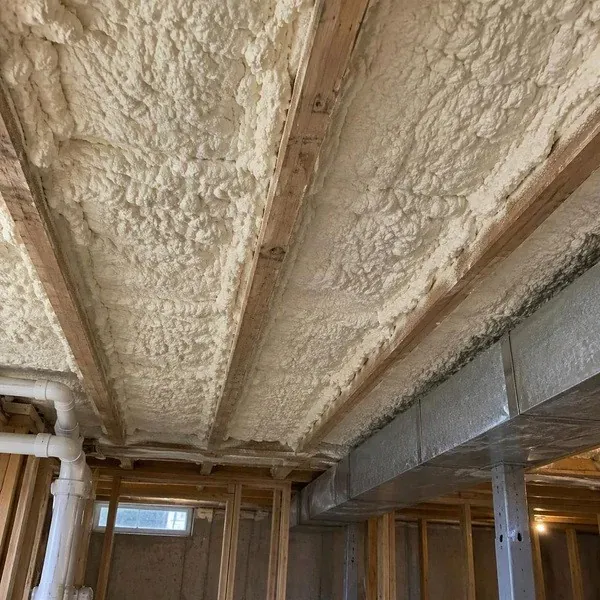
Voices, music and television travel through the air and set walls vibrating. Cavity absorption, sealed gaps and added mass all reduce it, and foam handles the first two well.
Footsteps, dropped objects and chairs dragging travel through the structure itself. Foam alone does little here. Resilient ceilings, underlay and decoupled framing do the heavy lifting.
Keeps movie sound in the basement instead of the bedrooms above.
Adds privacy on walls shared with bedrooms and living areas.
Cuts household noise during video calls.
Softens voices and TV sound travelling up or down.
Better privacy between tenants in converted houses.
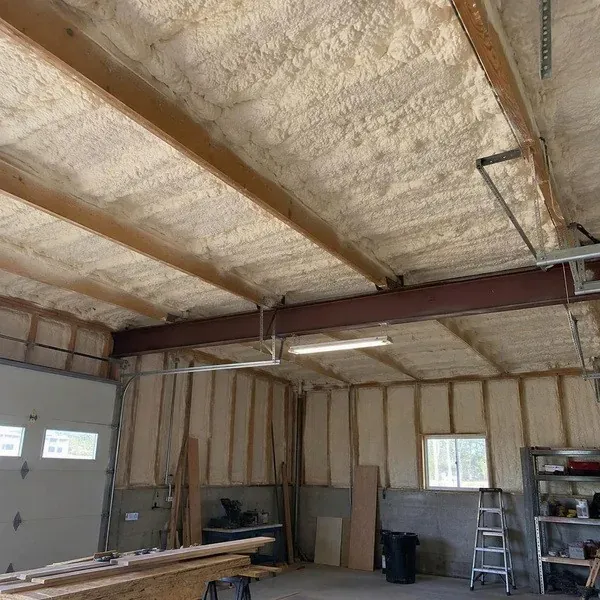
Spray-applied acoustic insulation under decks tames echo in large rooms.
Each step adds to the one before it. Relative improvement is approximate and depends on the build.
| Assembly | Relative sound improvement |
|---|---|
| Empty stud cavity | Baseline |
| Cavity filled with open cell foam | Small to moderate |
| Foam plus sealed outlets and gaps | Moderate |
| Foam plus a second layer of drywall | Significant |
| Foam plus resilient channel and double drywall | Largest |
The Ontario Building Code sets minimum sound ratings for walls and floors that separate dwelling units, so creating a legal second unit means the separation has to meet a rated assembly. Foam is one component of those assemblies, along with the drywall, framing and resilient channel. We work to the design your designer or building department has approved.
For property managers, we can often do the work between leases in the summer. Tell us the move-in date and we'll plan around it.
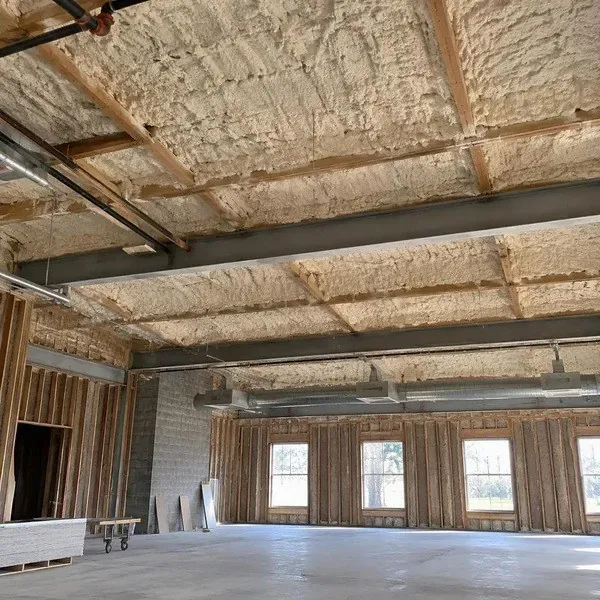
It helps, especially open cell foam in an empty cavity, but it is only one part of a quiet assembly. Mass and decoupling are needed for big improvements.
Open cell. Its soft, porous structure absorbs airborne sound better than rigid closed cell foam. See our open cell spray foam page.
If the ceiling below is open, yes, we can fill the joist bays with foam. For footstep noise, a resilient ceiling makes the biggest difference.
Free estimate
Tell us which rooms are noisy, what kind of noise it is and whether the walls or ceiling are open.