Closed cell with a moisture plan
Closed cell foam can work on stone walls that are in good repair, with sound mortar, working gutters and good drainage. We keep the foam thickness moderate and pay special attention to joist ends and window openings.
The Royal City's limestone heritage
Guelph earned the name Royal City partly for its handsome grey stone buildings, and the same local stone was used for homes, churches and mills across Wellington County, from Elora and Fergus to Rockwood. Galt in Cambridge has a similar stone heritage along the Grand River. Many of those houses are 120 to 180 years old, still lived in, still full of character and still cold every winter.
Insulating an old stone or solid brick house is not the same as insulating a modern wood-framed one. Solid masonry walls rely on warmth from inside to stay dry, and the wrong insulation in the wrong order can trap moisture in the stone, rot joist ends and damage mortar through freeze-thaw cycles. The good news is that most of the heat loss in these homes can be fixed without touching the walls at all.
This guide from the certified installers at Super Sprayers explains how solid masonry behaves, the safer order for upgrades, the options for stone walls when you do want to insulate them, the surprises old houses hide and how heritage designations affect the work. It applies equally to limestone, fieldstone and double-brick homes, and to the stone foundations under many later frame houses.
Much of the building stone quarried around Guelph is technically a dolostone, but everyone calls it limestone. You'll find it in the downtown core, on Catholic Hill, through Exhibition Park, St. George's Park and the Old University neighbourhood, and in the older streets of the Ward. Walls are often 16 inches thick or more.
Many of these homes also sit on fieldstone or rubble foundations, which move water and air through their joints very differently from poured concrete.
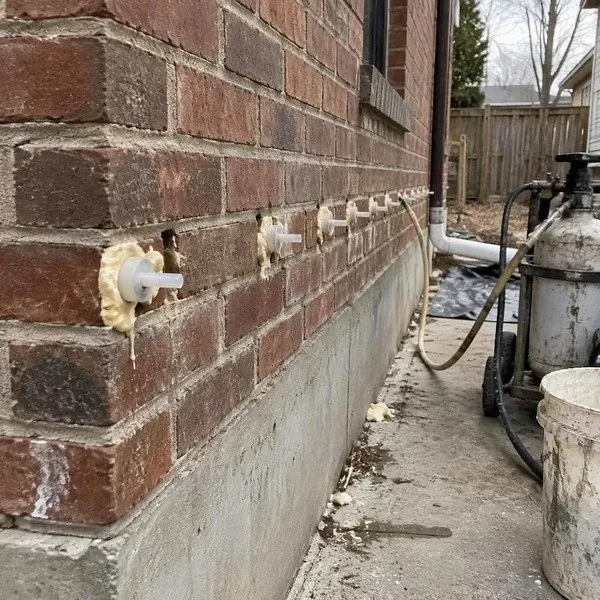
A solid stone wall absorbs rain and melting snow, then dries out in both directions, helped by heat leaking through from inside. Insulate the inside face, and the stone runs colder and dries more slowly. In a cold climate, wetter stone and mortar are more vulnerable to freeze-thaw damage.
Floor joists embedded in the stone are the biggest risk. Their ends sit in the colder, wetter part of the wall once the inside is insulated, and they can rot unseen.
Most of the heat loss in an old house is through air leaks and the attic, not the walls. Start where the risk is lowest and the payback highest.
Attic air sealing
Seal top plates, chases and the hatch. It's cheap and safe.
Attic insulation
Top up to about R-60 once the leaks are sealed.
Rim joists and sill
Seal where the house sits on the foundation, checking wood condition first.
Basement
Insulate only once drainage and parging are sound.
Walls last
Only with a moisture plan, during a renovation, and with joist ends checked.
Closed cell foam can work on stone walls that are in good repair, with sound mortar, working gutters and good drainage. We keep the foam thickness moderate and pay special attention to joist ends and window openings.
Some owners and designers prefer vapour-open insulation such as mineral wool board with a smart vapour retarder, which lets the wall dry inward. It's slower to install and gives less R-value, but it's more forgiving.
Older homes hide things that must be dealt with before insulation goes in.
The City of Guelph keeps a Municipal Register of Cultural Heritage Properties, and some properties are designated under the Ontario Heritage Act or sit in a heritage conservation district. Heritage rules focus mainly on the exterior. Interior insulation is usually unaffected, but new vents, siding or window changes may need approval.
If your home is listed or designated, check with the City's heritage planning staff before exterior work. Townships such as Centre Wellington and Guelph/Eramosa have their own processes.
Yes. Most of the benefit comes from the attic, rim joists and basement, and walls can be insulated with a moisture plan during a renovation.
Only after water management is sorted, meaning grading, gutters, parging and any leaks. Then closed cell foam can control condensation, with care at the rim joist.
Free estimate
Tell us the age of the house, the wall type and what feels cold. Photos of the basement walls help.