Usually triggered by a home inspection or sale
Urea Formaldehyde Foam Insulation (UFFI) Removal in Guelph
Super Sprayers removes urea formaldehyde foam insulation, known as UFFI, from the walls of older homes in Guelph, Kitchener, Cambridge and the surrounding towns, then reinsulates the cavities properly. Since 2018 we have completed more than 800 insulation jobs, and UFFI removal usually starts the same way: a home inspector notices plugged holes in the siding or brick during a sale, and suddenly a buyer, a seller and a lender all want answers.
UFFI was pumped into the walls of tens of thousands of Canadian homes in the 1970s, often under a federal energy program, before it was banned in December 1980. It is a completely different product from the spray polyurethane foam we install today, even though both get called foam insulation. Most UFFI has long since stopped releasing formaldehyde, but it still carries a stigma that can complicate a sale.
This page explains how to tell whether a home has UFFI, how it affects Ontario real estate transactions and how we remove it when that is the right call. Our crews are WSIB covered and insured, we work under containment with HEPA filtration, and we document the removal so you have paperwork to show buyers, lenders and insurers.
- In business since 2018
- 800+ jobs completed
- WSIB covered, licensed and insured
- 2-year labour warranty
- 5-star Google rating
What UFFI Is and Why Canada Banned It in 1980
UFFI was made on site by mixing a urea formaldehyde resin with a foaming agent and pumping it into closed walls through holes drilled from outside. Poorly mixed batches released formaldehyde gas, and some homeowners reported irritation and odour. The federal government banned it under the Hazardous Products Act in December 1980.
Over the following decades, the foam's formaldehyde emissions dropped to very low levels in most homes. What remains is usually a crumbly, dried-out foam that adds little insulation value.
How to Tell if Your Home Has UFFI
Only a sample confirms it, but these clues are common.
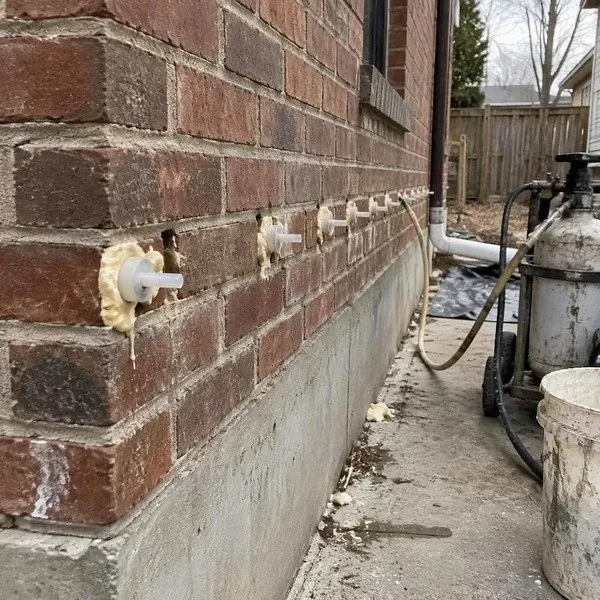
- Rows of small plugged holes in brick mortar or siding, often around 1 inch across
- Matching patched holes on interior walls in some homes
- A home insulated or renovated between about 1975 and 1980
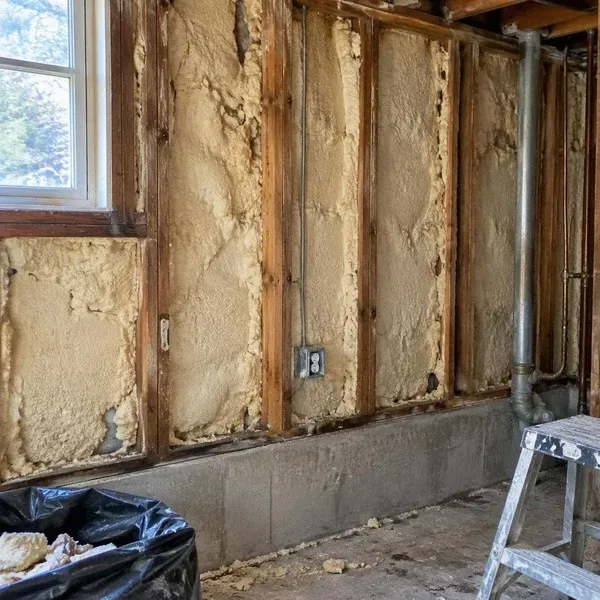
- Crumbly, cream or light yellow foam seen behind an outlet cover or in an opened wall
- Foam that turns to powder when touched, unlike spray polyurethane which is firm
UFFI and Ontario Home Sales
The standard Ontario agreement of purchase and sale includes a clause where the seller states whether, to their knowledge, the home contains or has ever contained UFFI. That clause is why UFFI still comes up at closing more than 40 years after the ban. Some lenders and insurers also ask about it.
If UFFI is found or suspected, buyers often ask for removal or a price adjustment. Removal with documentation settles the question for the next sale too.
How UFFI Is Removed
- 1
Confirm it
A sample is taken and the affected walls are mapped.
- 2
Set up containment
Rooms are sealed with poly and zip doors, and HEPA air machines run throughout.
- 3
Open the walls
Drywall or plaster on affected walls is removed, or siding outside where that's the better route.
- 4
Remove the foam
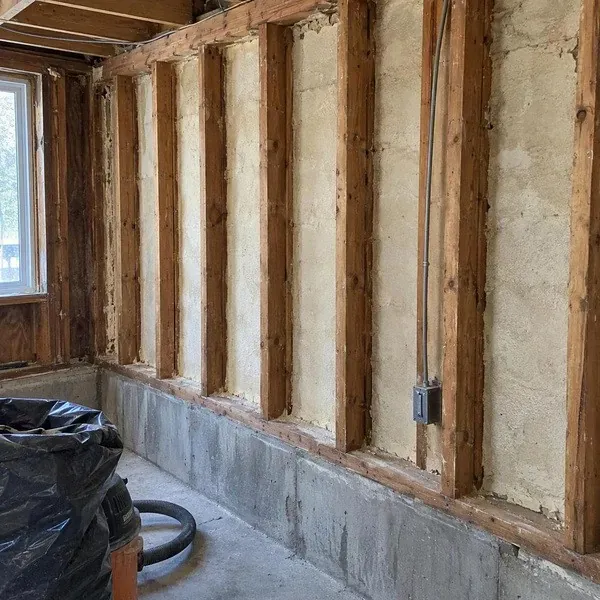
UFFI is scraped and HEPA-vacuumed out of every cavity and bagged.
- 5
Clean the cavities
Studs and sheathing are cleaned and inspected for moisture damage.
- 6
Document
You receive photos and a written record of the walls cleared.
If you need independent air testing afterward for a sale or lender, we can coordinate with a testing company of your choice.
Reinsulating After UFFI Removal
With the walls open and clean, it's the ideal time to insulate them properly. Closed cell spray foam gives the highest R-value in shallow 2x4 walls and seals air leaks at the same time. Our wall insulation page covers the options.
UFFI Questions
Is UFFI still a health risk today?
In most homes, formaldehyde levels from UFFI installed in the 1970s have fallen to background levels, and Health Canada has said UFFI is not a significant source of formaldehyde decades later. If you have concerns, an indoor air test gives a measured answer.
Does UFFI have to be removed before I sell?
No law requires removal, but you must disclose it if you know about it. Many sellers remove it to avoid a difficult negotiation.
What does UFFI removal cost?
It depends on how many walls contain it, whether we work from inside or outside and the finish repair needed. We quote after confirming which walls are affected.
Related Services and Resources
- Wall Insulation More R-value from shallow walls during a reno.
- Asbestos and Vermiculite Removal Tested first, then removed under Ontario regulation.
- Insulation Removal Old, wet or rodent-soiled insulation vacuumed out.
- Insulating Older and Stone Homes Limestone, fieldstone and century homes done safely.
Free estimate
Book a UFFI Inspection
Tell us why you suspect UFFI and whether a sale or inspection deadline is involved. Photos of plugged holes help.
- Call or text226-780-8752
- Emailinfo@supersprayers.ca
- Mon to Sat: 7:00am to 9:00pmSun: 9:00am to 6:00pm