Skip to content
Super Sprayers

Additions, older homes and converted cottages

Crawl Space Spray Foam Insulation in Guelph

Super Sprayers insulates crawl spaces under additions, sunrooms, older farmhouses and converted cottages across Guelph, Puslinch, Wellington County and Waterloo Region. Since 2018 we have completed more than 800 insulation jobs, and crawl spaces are the ones most homeowners have never actually looked inside. They are low, dark and unpleasant, which is exactly why problems down there go unnoticed until a pipe freezes or the floor above turns icy.

The typical crawl space we see has a dirt or gravel floor, open vents to the outside and a few batts stapled between the floor joists that have long since fallen down. In January, cold air flows straight through, chilling the floor above and freezing any plumbing that runs through the space. In summer, humid air condenses on the cool surfaces and feeds mould that you can smell in the rooms upstairs.

Closed cell spray foam fixes both problems by sealing and insulating the crawl space walls and rim joist, turning the crawl space into a dry, semi-heated part of the house. Our crews are CUFCA certified and WSIB covered, work to the CAN/ULC-S705 installation standard and have the gear, the patience and the flexibility that tight, low crawl spaces demand.
  • In business since 2018
  • 800+ jobs completed
  • WSIB covered, licensed and insured
  • 2-year labour warranty
  • 5-star Google rating

Vented or Sealed: Which Works in Ontario

Vented crawl space

The traditional approach, with vents to the outside and insulation in the floor above. In our climate the vents bring in freezing air in winter and humid air in summer, so the crawl space is usually damp and the floor above is hard to keep warm.

Sealed, conditioned crawl space

Vents are closed, the walls and rim joist are insulated, and a sealed ground cover goes over the soil. The crawl space stays close to indoor temperature, pipes don't freeze and moisture stays under control. This is what we recommend in most cases.

Insulating Crawl Space Walls

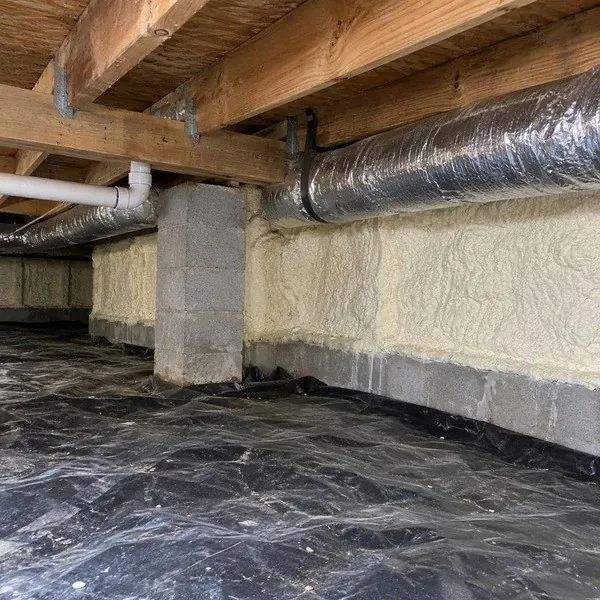
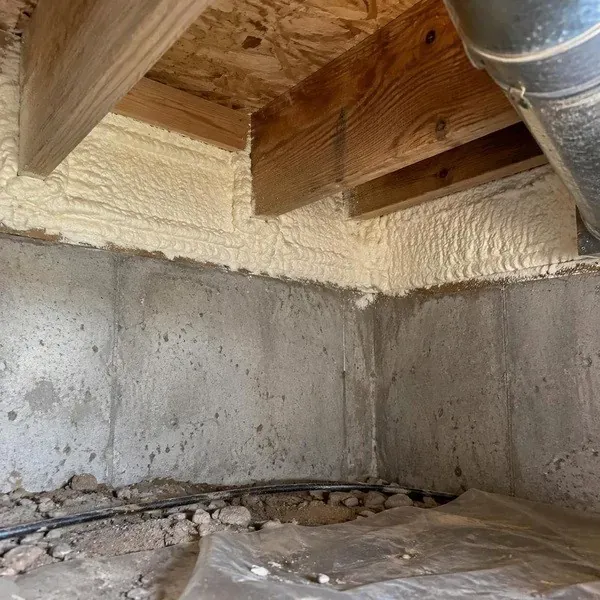
We spray closed cell foam on the inside of the foundation walls and the rim joist, usually 2 to 3 inches thick. The foam bonds to block, concrete or stone and seals the joint where the wall meets the floor framing. That joint is where most cold air gets in.

A thin strip of foam is often carried a short way onto the ground cover at the base of the wall to tie the two together.

Spray foam sealing the rim joist corner of a crawl space

Insulating the Floor Above a Vented Crawl

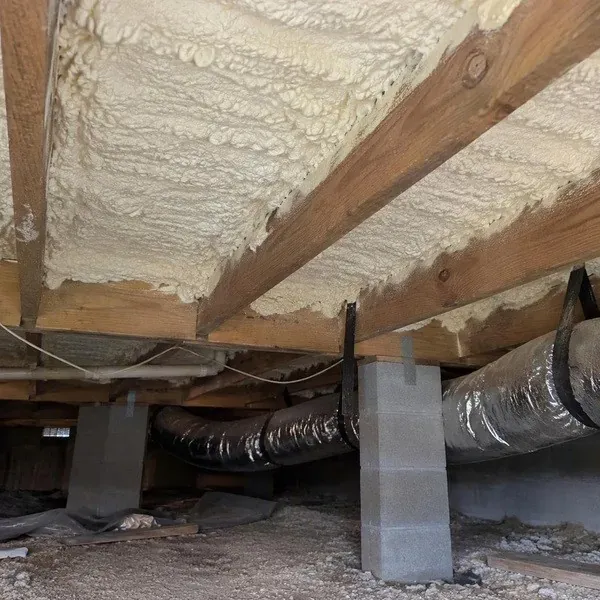
Sometimes sealing the crawl space isn't practical, for example under a cottage with an open pier foundation. In that case we spray the underside of the floor instead, filling the joist bays with closed cell foam. The floor gets warm and air-tight.

The catch is that pipes in the crawl space are now outside the insulation. They need to be moved, heat-traced or insulated, or they will freeze.

Spray foam between floor joists above a crawl space

Ground Cover and Moisture Control

Bare soil gives off a steady stream of moisture into the crawl space. In a sealed crawl space we cover the ground with heavy polyethylene, overlapped and taped at the seams, and sealed to the walls. That keeps soil moisture out of the air.

We don't make claims about radon. If radon is a concern, have the home tested and speak to a certified radon mitigation professional before sealing the space.

Crawl space walls insulated above a sealed poly ground cover

Working in Tight Crawl Spaces

Every crawl space is different. These are the practical things we check before quoting.

Crawl Space Questions

Should my crawl space be vented or sealed?

In most Ontario homes, sealed works better. It keeps the space dry and close to indoor temperature, which protects pipes and warms the floor above.

Will insulating the crawl space stop frozen pipes?

Sealing and insulating the walls usually does, because the pipes end up inside the warm envelope. Insulating only the floor can make pipe freezing worse.

How much clearance do you need to spray?

About 18 inches is a practical minimum. Tighter spaces may need an alternative approach, which we'll assess on site.

Free estimate

Get a Crawl Space Quote

Tell us the rough size, the height and what kind of floor the crawl space has. A photo through the hatch helps a lot.

Call NowFree Quote