Installed properly, batts still earn their place
Batt, Fiberglass and Mineral Wool Insulation in Guelph
Super Sprayers installs fiberglass batts, mineral wool batts and fiberglass board insulation in new homes, additions, basements and renovations across Guelph and the surrounding area. Spray foam is our specialty, but it isn't always the right fit for every wall or every budget, and a certified insulation contractor should be able to install batts as carefully as foam. Since 2018 we have completed more than 800 jobs, and plenty of them used both materials in the same house.
Batts are the most common insulation in Canadian homes because they are affordable, easy to inspect and perform well when they are installed without gaps or compression. The problem is that they rarely are. Batts crammed around wires, squeezed behind electrical boxes or cut short at the top plate lose a big part of their rated R-value, and they do nothing at all to stop air leaks.
This page covers where batts make sense, how fiberglass and mineral wool compare, how a flash-and-batt hybrid combines foam and batts, and how we seal the vapour barrier so it is ready for inspection. Our crews are CUFCA certified and WSIB covered, and we install every batt as if the building inspector were watching over our shoulder.
- In business since 2018
- 800+ jobs completed
- WSIB covered, licensed and insured
- 2-year labour warranty
- 5-star Google rating
Where Batts Still Make Sense
- Deep 2x6 exterior walls in new construction with a sealed vapour barrier
- Interior walls and floors where sound matters and cost does too
- Basement stud walls built in front of a foam layer on the foundation
- Budget-driven projects where air sealing is handled separately
- Flash-and-batt walls that pair a thin foam layer with batts
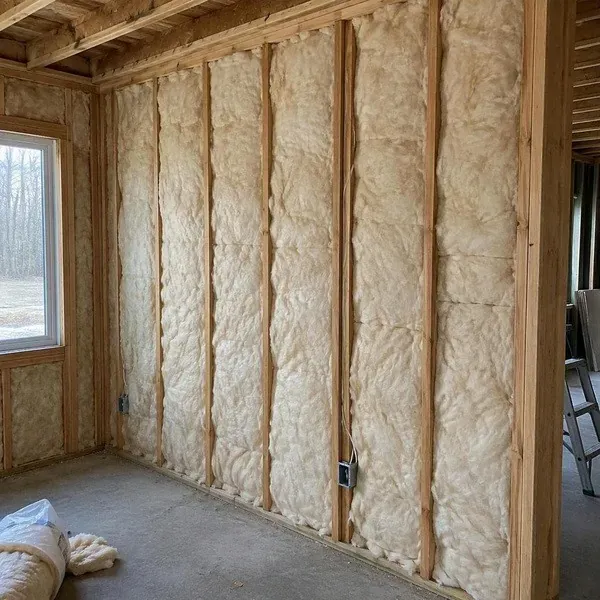
Fiberglass vs Mineral Wool Batts
| Factor | Fiberglass batt | Mineral wool batt |
|---|---|---|
| R-value per inch | About R-3.3 to R-3.7 | About R-4 to R-4.3 |
| Fire resistance | Non-combustible glass; facings may burn | Very high, melts above 1,000°C |
| Sound absorption | Good | Better (denser) |
| Moisture | Doesn't absorb; loses R when wet | Water repellent and dries well |
| Fit | Soft and easy to compress too much | Firm; friction-fits tightly |
| Price | Lower | Higher |
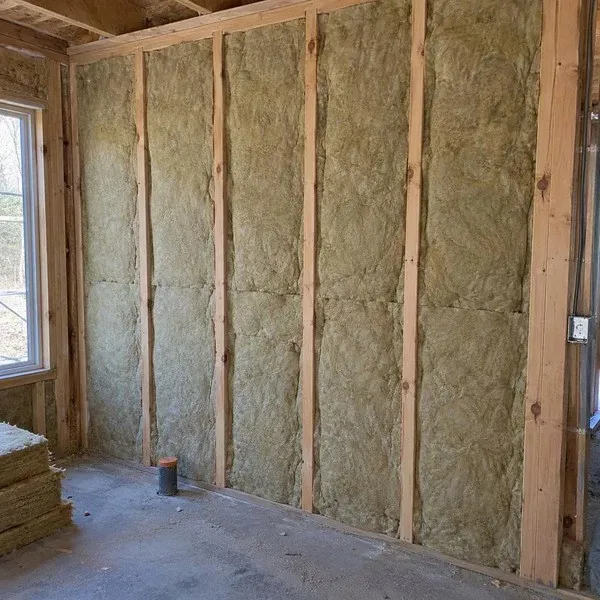
Fiberglass Sheet and Board Products
Rigid and semi-rigid fiberglass boards are used where batts won't stay put, such as mechanical rooms, duct and equipment enclosures and some basement wall systems. Foil-faced versions add a radiant and vapour-control face. They are cut to fit and fastened or friction-fit, with joints taped where the design calls for it.
Tell us what you're trying to insulate and we'll confirm which sheet or board product suits it.
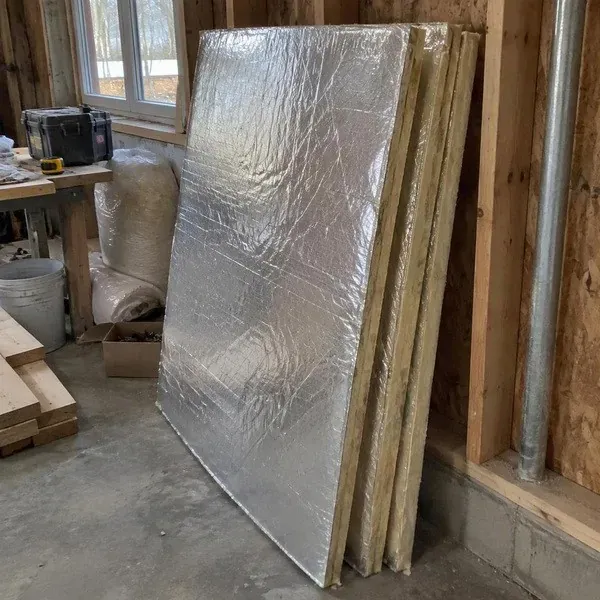
Flash and Batt: Foam Air Seal Plus Batts
Flash and batt means spraying a thin layer of closed cell foam against the sheathing, then filling the rest of the cavity with batts. The foam air seals the wall and keeps the sheathing warm. The batts add inexpensive R-value.
The foam must be thick enough that the inside face of the foam stays above the dew point in winter. In our climate that usually means at least 1.5 to 2 inches. Too thin, and condensation forms at the foam and batt boundary.
Installing Batts Without Gaps
These are the mistakes we see on other contractors' jobs, and the rules our crews follow to avoid them.
- Never compress a batt to fit; cut it to the cavity
- Split batts around wires instead of stuffing them behind
- Cut neatly around electrical boxes and pipes
- Fill short and odd-sized bays completely
- Fit batts tight to the top and bottom plates
- Keep batts in full contact with all six sides of the cavity
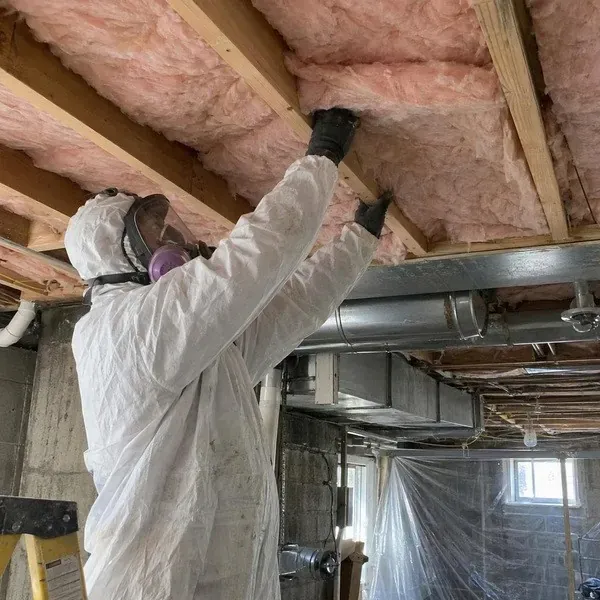
Sealing the Vapour Barrier
Batt walls in heated buildings need a vapour barrier on the warm side. We install 6 mil polyethylene lapped over framing members and sealed with acoustic sealant at every joint, top plate and bottom plate. Electrical boxes get sealed poly boxes or gaskets.
The result is ready for the municipal insulation inspection before drywall.
Batt Insulation Questions
Is spray foam or batt insulation better for my project?
It depends on the space, the budget and whether air sealing is handled another way. Our spray foam vs other insulation guide compares them honestly.
Do you install the vapour barrier too?
Yes. We install and seal the poly and acoustic sealant so the walls are ready for inspection.
Free estimate
Request a Batt Insulation Quote
Send the wall area or drawings and tell us which areas need insulation.
- Call or text226-780-8752
- Emailinfo@supersprayers.ca
- Mon to Sat: 7:00am to 9:00pmSun: 9:00am to 6:00pm