What it does
Seals gaps completely so there's no draft or scent trail leading inside. Offers no food value and no soft nesting material, unlike batts.
The honest answer
Spray foam helps keep mice out, but it is not pest-proof on its own. Foam seals the small gaps along sill plates, rim joists and utility penetrations that mice use to get inside, and it gives them nothing soft to nest in or eat. A determined mouse can still chew through exposed foam, so the best results come from pairing foam with materials mice can't chew.
Every fall, as temperatures drop across Guelph and Wellington County, mice start looking for a warm way in. Many of the rim joists we open up have nests, droppings and chewed batts behind them, because loose fiberglass offers a perfect home right at the most common entry point. Sealing that area properly is one of the most effective pest-control steps a homeowner can take, and it saves heat at the same time every winter.
This guide from the installers at Super Sprayers explains how mice get into Ontario homes, what spray foam does and doesn't stop, how to combine it with steel wool and mesh, and what to do when mice have already damaged insulation in an attic or barn. It applies to insects too, which are far less of a concern than rodents.
A mouse can squeeze through a gap about the width of a pencil. These are the openings we find most often.
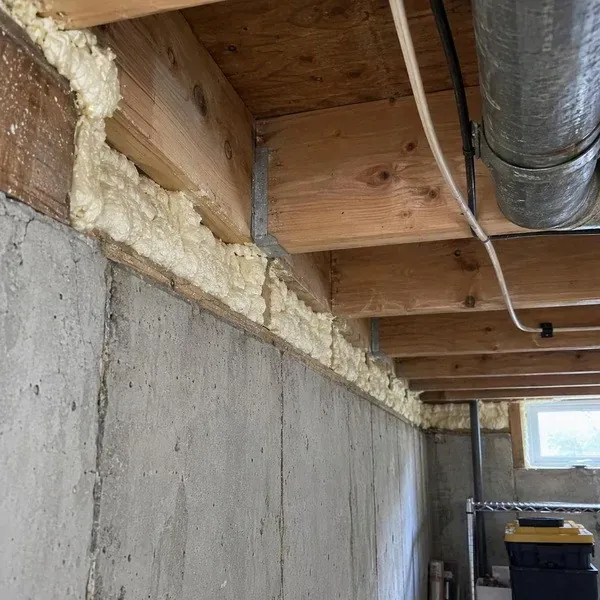
Seals gaps completely so there's no draft or scent trail leading inside. Offers no food value and no soft nesting material, unlike batts.
Mice and rats can chew exposed foam, especially near an existing entry point. Foam alone is not a barrier against an animal that's already determined to get in.
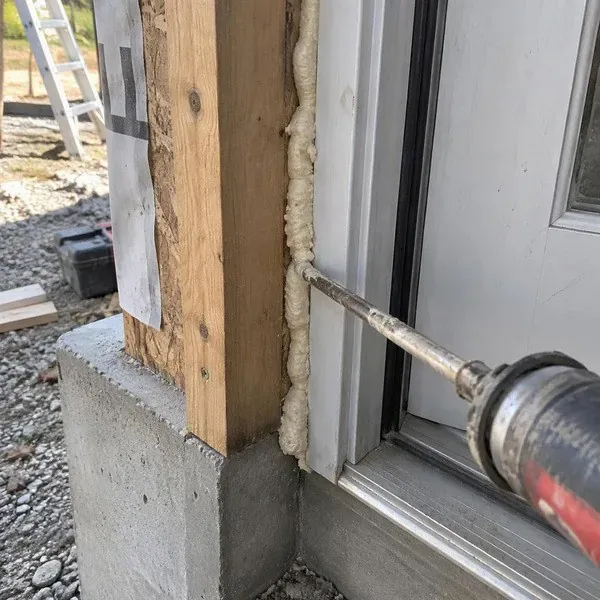
At known entry points, the best approach is to pack the gap with coarse steel wool or copper mesh first, then seal over it with foam. The mesh stops chewing, and the foam holds it in place and air seals the gap. Larger openings get galvanized hardware cloth or sheet metal.
Outside, sealing gaps where siding meets the foundation and keeping vegetation trimmed back helps just as much.
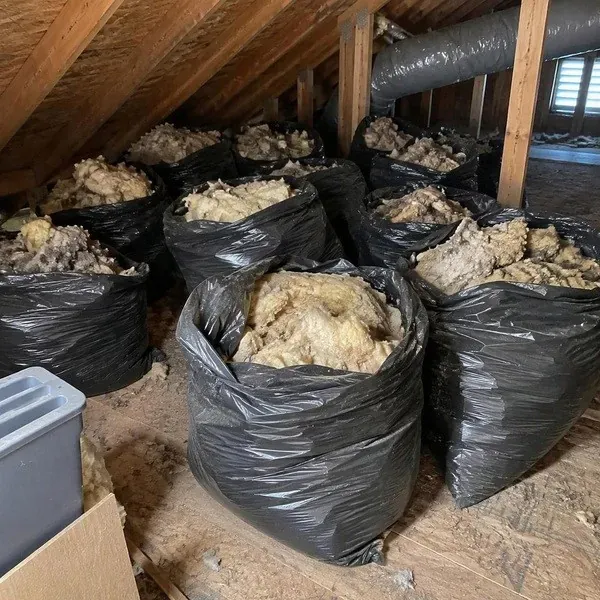
Insulation full of droppings, urine and nesting material is a health concern and has to be removed, not topped up. We vacuum it out, sanitize the area and seal entry points before reinsulating. See our insulation removal page.
In barns and farm buildings, closed cell foam sprayed directly to the steel leaves no cavity for rodents to live in. Areas within reach of animals may need a protective coating. See our agricultural spray foam page.
Yes, they can chew exposed foam, although it has no food value for them. Pairing foam with steel wool or mesh at entry points stops them.
No. Cured foam has no food value for insects, and sealing gaps generally reduces insect entry as well.
Free estimate
Seeing mice every fall? Tell us where and we'll find and seal the entry points, starting with the rim joists.